Annual TN Emerging Infections Program Scientific Presentation Day
EIP Day will be presented on Zoom, Oct. 28, 2026 from 9 a.m. to 1:30 p.m. The deadline to have scientific posters uploaded to EIP Day's website will be Oct. 15, 2026.
To receive credit for contact hours you must:
- Attend the entire meeting
- Complete the online evaluation by 11:59pm, Friday, December 11, 2026
- No fewer than 4 contact hours may be earned for lab and nurse professionals for meeting. If you attend fewer than all sessions or do not complete the evaluation, no contact hours will be earned.
- If you are viewing the EIP Day video after October 28, 2026, please contact Melinda Eady at melinda.d.eady@vumc.org for the evaluation link to receive CEU credits.
2026 EIP Day Registration
-
Tennessee Emerging Infections Program
27th Annual Scientific Presentation Day
October 28, 2026
Program No. 137-005-269:00 – 9:10am Welcome and Thank You from Dr. Keipp Talbot and Dr. Mary-Margaret Fill 9:10 – 9:50am The Emerging Infections Program: 30 Years of Collaboration, Science, and Advancing Public Health
Ruth Lynfield, MD
Minnesota Department of Health- Discuss the importance of public health surveillance in understanding the epidemiology of emerging infections.
- Understand how EIP has informed public health policy.
9:50 – 10:30am Landscape of Vaccines
Keipp Talbot, MD, MPH
Vanderbilt University Medical Center- Explain how vaccines have traditionally been licensed.
- Describe how vaccines have previously been recommended.
- State the new methods for vaccine recommendation.
10:30 –10:50am Serving up Safety: One Complaint at a Time
TDH Foodborne and Enteric Diseases Program
Katie Garman, MPH, CPM
Tennessee Department of Health- Define the role of foodborne complaint systems in public health surveillance.
- Illustrate how online reporting improves response workflows for state and local public health staff.
- Highlight the impact on outbreak detection and prevention.
- Identify opportunities for system evaluation and continuous improvement.
10:50 –11:10am Poster Presentations 11:10 –11:30am Wanted: Bacterial Isolates for Phenotypic Testing – The Gold Standard
Jennifer Thomas, Ph.D.
Centers for Disease Control and Prevention- Define genotypic versus phenotypic testing.
- Describe the importance of bacterial culture as the gold standard, to allow phenotypic testing in a world where whole-genome sequencing/genotyping is encouraged.
11:30 –11:50am Acute Histoplasmosis Outbreak - Tennessee, 2025
Emma Taylor-Salmon, MD
Tennessee Department of Health- Summarize the epidemiology of histoplasmosis in the United States.
- Analyze how environmental and occupational exposures contribute to outbreaks.
- Differentiate between the different clinical presentations of acute histoplasmosis.
- Apply principles of outbreak investigation to a histoplasmosis cluster.
- Evaluate diagnostic and surveillance tools used in outbreak settings.
- Assess environmental and occupational risk factors using a One Health perspective.
11:50 – 12:10pm Poster Presentations 12:10 –12:40pm Interesting Healthcare Associated Infections Investigations
Carolyn Stover, MPH, CIC, CPH
Tennessee Department of Health- Explain the investigation processes and outcomes of HAI investigations.
- Identify infection prevention and control gaps seen in the investigations.
- Discuss proper infection prevention and control procedures that addressed the identified gaps.
- Highlight unique cases.
12:40 –1:00pm Poster Presentations 1:00 – 1:20pm TN Department of Health Rapid Fire Updates
Mary-Margaret Fill, MD, MPH
Tennessee Department of Health- Describe the recent introduction of New World Screwworm into the United States and the ongoing One Health response.
- Compare the ongoing Ebola (Bundibugyo) virus disease outbreak in DRC to prior EVD outbreaks and summarize steps to limit disease introduction into the U.S.
- Articulate ongoing challenges in measles control in the United States, and recent epidemiologic trends in Tennessee and neighboring states.
- Explain identified risk factors for recent human cases of tetanus in Tennessee.
- Identify practical applications for other diseases of timely relevance covered in the presentation.
1:20 – 1:25pm Closing Remarks Vanderbilt University Medical Center’s Department of Health Policy is approved as a provider of Continuing Education Programs in the clinical laboratory sciences by the ASCLS P.A.C.E.® Program 137-005-26. All sessions are an Intermediate level of instruction.
This nursing continuing professional development activity was approved by the Georgia Nurses Association, an accredited approver by the American Nurses Credentialing Center’s Commission on Accreditation.
To receive credit for 4 contact hours you must:
- Sign in through Zoom Registration link, or go to website for additional options
- Attend the entire Zoom meeting
- Complete poster presentation poll questions
- Complete the online evaluation by 11:59pm, Friday, December 11, 2026
- No fewer than 4 contact hours may be earned for this meeting. If you attend fewer than all sessions, do not complete poster presentation poll, no contact hours will be earned.
Attestation: All speakers attest that any relationships/affiliations will have no bias or otherwise influence their involvement in the activity.
-

Dr. Ruth Lynfield received her medical degree from Cornell University Medical College and trained in pediatrics and pediatric infectious diseases at Massachusetts General Hospital. She then attended at Massachusetts General Hospital in pediatric infectious diseases and worked at the Massachusetts State Laboratory. In 1997, she joined the Minnesota Department of Health as a medical epidemiologist, was appointed State Epidemiologist in 2007, and MDH Medical Director in 2010. Dr. Lynfield has served as the co-chair for the Emerging Infections Program Steering Committee since 2008 and has been the Co-PI for the MN EIP for many years. She has developed surveillance systems, investigated outbreaks, conducted research on emerging infectious diseases, and helped develop public health policy. She has served on multiple public health advisory committees, including the National Vaccine Advisory Committee, the FDA Vaccines and Related Biological Products Advisory Committee, and the CDC Board of Scientific Counselors for the Office of Infectious Diseases. She is an Associate Editor for the American Academy of Pediatrics Red Book and is an Adjunct Professor in Medicine and in Epidemiology at the University of Minnesota. 
H. Keipp B. Talbot, MD, MPH, FIDSA is a Professor of Medicine and Health Policy within the Division of Infectious Diseases at Vanderbilt University Medical Center. She also holds the Vaccinology Research Directorship. As a dual appointee in Medicine and Health Policy, Dr. Talbot has played a pivotal role in the evaluation of viral respiratory diseases in adults and the evaluation of new and existing vaccines in older adults to improve immunization policy and vaccine development. Her goal is to continue to evaluate the use and effectiveness of vaccines, with a focus on prevention of infection and morbidity in adults. Dr. Talbot began her career by investigating the presentation of influenza in hospitalized adults. Her recent work has contributed to our understanding of the epidemiology of SARS-CoV-2, influenza, and respiratory syncytial virus. Dr. Talbot completed her tenure as Chair of the Advisory Committee on Immunization Practices (ACIP) in June 2025. During her 7 years on ACIP, she also served as the chair of the ACIP’s Influenza Vaccine Work Group and co-chair of the COVID-19 Vaccine Safety Technical Work Group. She has authored more than 280 manuscripts. Her work has informed national policy on the implementation of enhanced influenza vaccines for older adults, the use of pneumococcal vaccines in the setting of changing epidemiology, and COVID-19 vaccine introduction and use. Dr. Talbot currently co-leads the Tennessee Emerging Infections Program at Vanderbilt, which works to better understand viral respiratory disease epidemiology and inform vaccine policy. 
Katie Garman currently serves as the Director of the Foodborne and Enteric Diseases Program at the Tennessee Department of Health. Her main responsibilities are to coordinate Tennessee’s Foodborne Disease Active Surveillance Network (FoodNET), Foodborne Diseases Centers for Outbreak Response Enhancement (FoodCORE), Rapid Response Team (RRT), Environmental Health Network (EHS-NET) and Tennessee’s Integrated Food Safety Centers of Excellence. She is also responsible for providing leadership to local and state health department staff in foodborne outbreak detection and response. Ms. Garman has been with the Tennessee Department of Health since 2002 and with the Foodborne and Enteric Diseases Program since 2008.
A native of Western New York, Ms. Garman, completed her undergraduate degree at Ithaca College in Ithaca, NY. Upon graduating from Ithaca College, she attended Emory University’s Rollins School of Public Health.
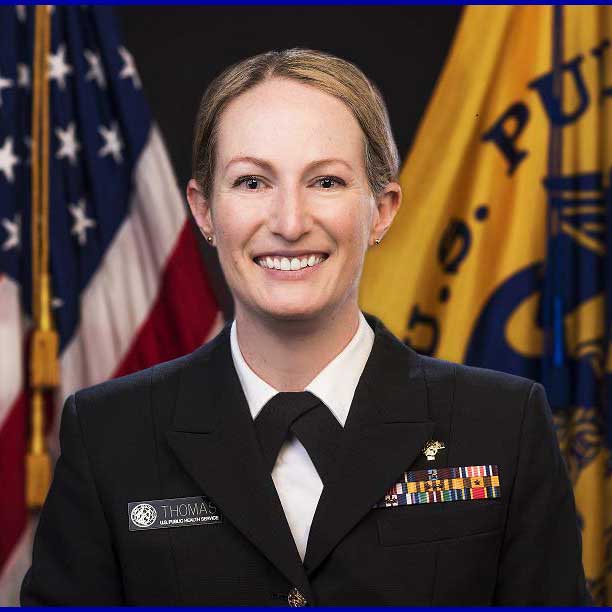
Dr. Jennie Thomas is Chief of the Meningitis, Pertussis and Diphtheria Laboratory Branch in CDC’s Division of Bacterial Diseases. She earned her B.A. in French from Agnes Scott College and her Ph.D. in microbiology and molecular genetics from Emory University, where she studied capsule expression in Neisseria meningitidis. Since joining CDC in 2006, she has studied monkeypox virus virulence; developed detection and characterization tests for bacterial meningitis pathogens; built laboratory capacity for bacterial meningitis case confirmation in the African Meningitis Belt; and led a laboratory team developing and validating biothreat pathogen detection tests for use in nationwide laboratory surveillance programs. An active-duty Scientist Officer in the U.S. Public Health Service, CAPT Thomas’s public health emergency response work includes deployment for CDC responses to pandemics or outbreaks of the viruses influenza H1N1, Ebola Zaire, Zika, SARS-CoV-2, Ebola Sudan, and monkeypox. Outside of work, she enjoys spending free time with family and friends, training for Atlanta Track Club Road races, and attending Atlanta United soccer matches. 
Dr. Emma Taylor-Salmon is a pediatric infectious disease physician and field epidemiologist, with particular interest in zoonotic, vector-borne, and emerging infections. She received her undergraduate degree from Bard College, after which she spent two years at the NIH investigating malaria transmission-blocking vaccines. She obtained her medical degree from Drexel University College of Medicine. She completed her pediatric residency and clinical fellowship in pediatric infectious diseases at the Yale School of Medicine. She then transitioned into an Associate Research Scientist position at the Yale School of Public Health, where she investigated the drivers of dengue virus dynamics in Florida and the Caribbean. She is currently serving as an Epidemic Intelligence Service Officer with the CDC, stationed at the Tennessee Department of Health, where she works with multiple divisions assisting with infectious disease surveillance, outbreak investigation, and public health education. 
Carolyn Stover is an epidemiologist serving as the HAI Coordinator and Program Director for the Healthcare Associated Infections and Antimicrobial Resistance Program at the Tennessee Department of Health. She received her Master’s in Public Health from the State University of New York at Albany and completed two internships with the Bureau of Communicable Disease Control and a graduate assistantship within the Division of Epidemiology at the New York State Department of Health. She joined TDH’s HAI/AR program in 2018 and has worked on MDRO containment and response and was previously the TN Regional Epidemiologist for the Southeast Region of the AR Lab Network (ELC G2) and the HAI/AR Outbreak Team Lead. She is also a doctoral student at University of Nebraska Medical Center pursuing her Doctor of Public Health in Emergency Preparedness. Carolyn is Certified in Infection Control (CIC), Certified in Public Health (CPH), and is an active member of the Council for State and Territorial Epidemiologists (CSTE). 
Dr. Mary-Margaret Fill, serves as State Epidemiologist for the Tennessee Department of Health, maintaining oversight of the Department’s communicable disease surveillance, outbreak response, environmental health and emergency preparedness portfolios. She holds a Bachelor of Science in Microbiology and minor in Security and Intelligence from The Ohio State University, a Master of Public Health degree from Vanderbilt University and a Doctor of Medicine degree from the Mercer University School of Medicine. Dr. Fill completed dual-residency training in Internal Medicine and Pediatrics at Vanderbilt University Medical Center and is board-certified in both specialties. Following residency, she served as an Epidemic Intelligence Service Officer with the Centers for Disease Control and Prevention and as a fellow in the Johns Hopkins Center for Health Security Emerging Leaders in Biosecurity program. Dr. Fill has been with the TN Department of Health since 2015, and has worked on foodborne, waterborne, zoonotic, vaccine-preventable and healthcare-associated disease outbreaks, emerging pathogens and emergency preparedness, and overarching strategy for communicable disease surveillance and informatics initiatives.
-
2026 posters will be published here following submission and review. Please check back for new content.